
FOLLOW US





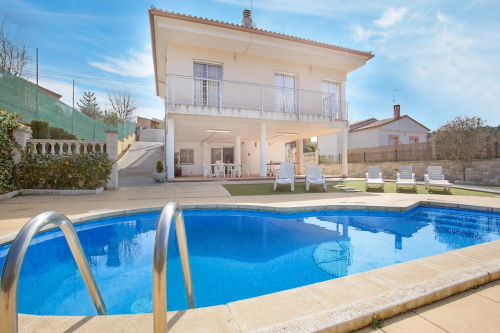
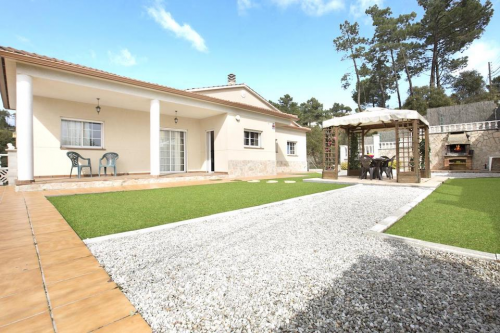
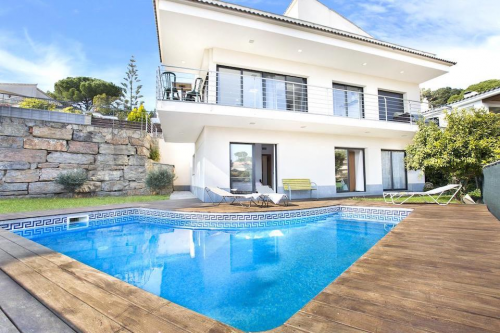
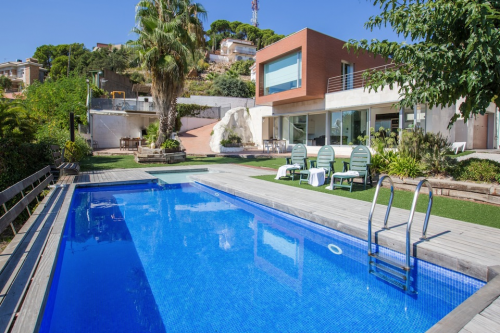
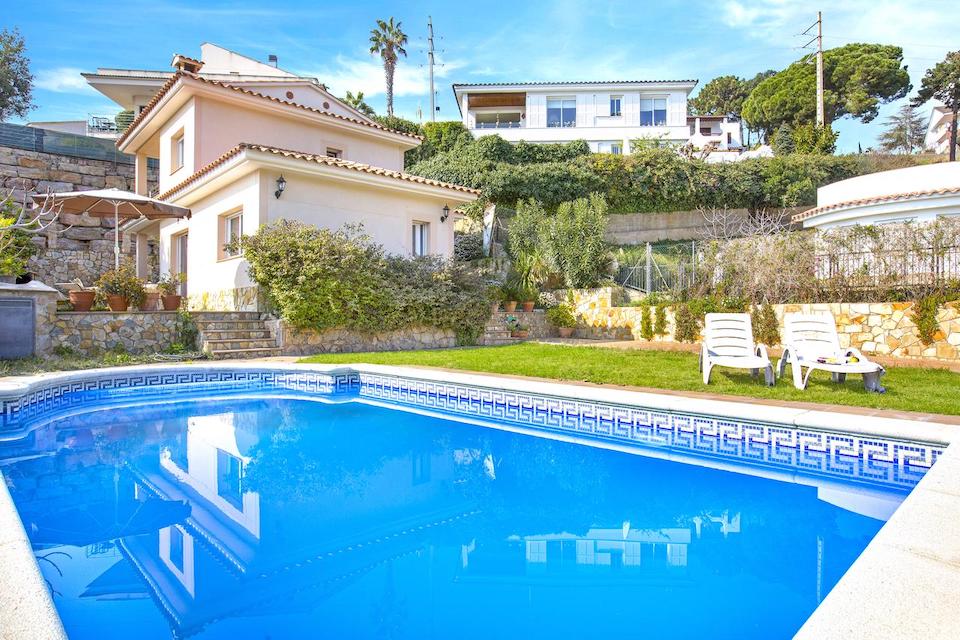
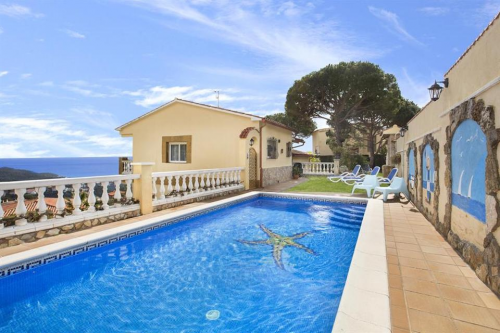
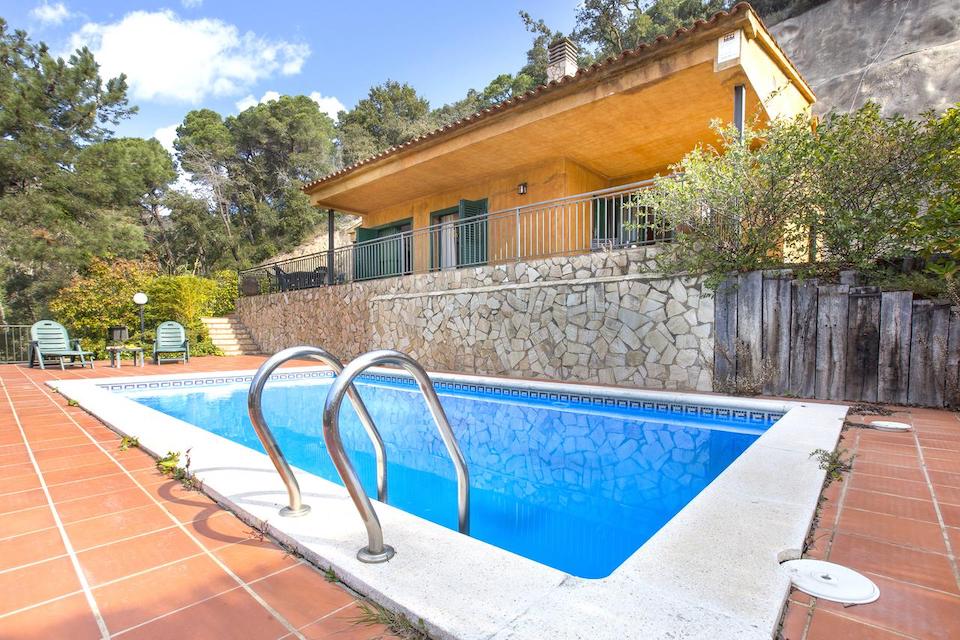
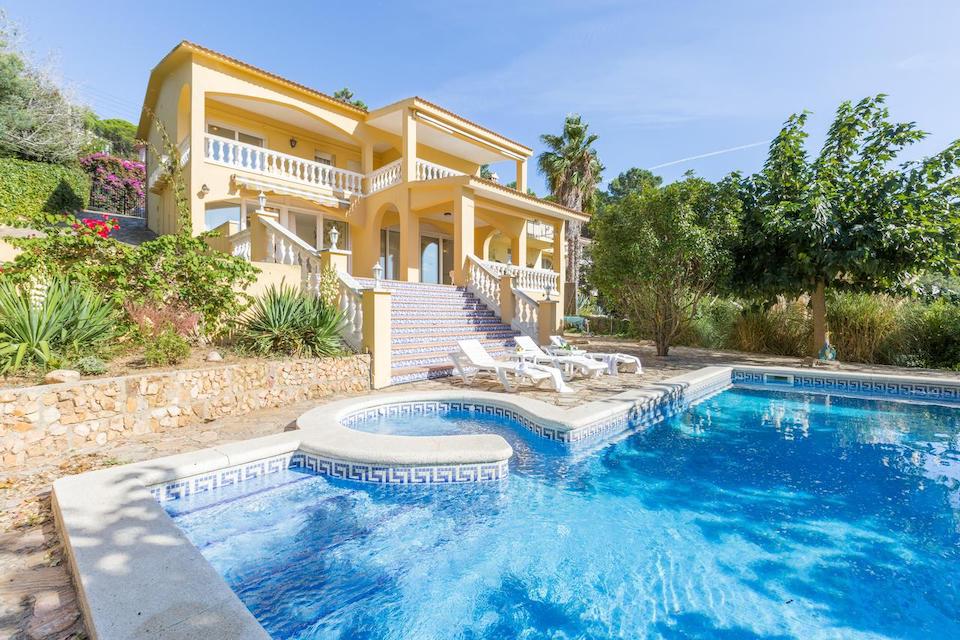
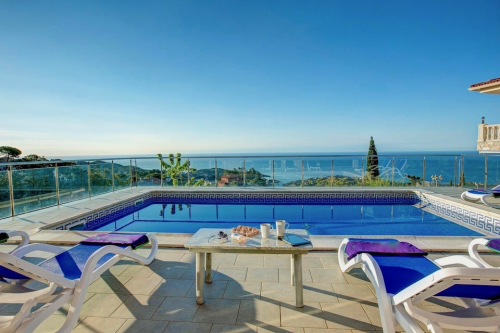
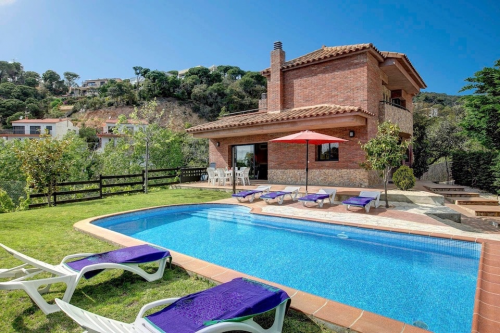
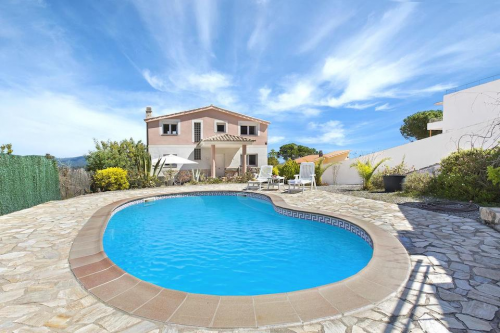
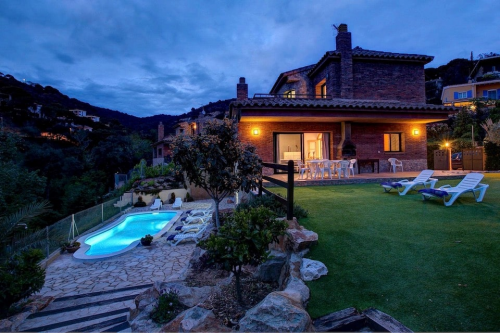
Lloret de Mar is the Costa Brava's biggest resort — but our Lloret de Mar villas sit in the residential hills above the strip, not on it. All with private pools, sleeping six to ten, and a short drive from four Blue Flag beaches, the town amenities and the resort's watersports scene — but quiet, private and pool-equipped at night. Browse the villas below or read on for the full destination guide.
Our Lloret de Mar villas to rent collection is twelve private-pool villas in the residential hills above the Costa Brava's largest resort. All come with a private pool and outdoor space, sleeping from six up to ten across three to five bedrooms — suited to families, extended groups and multi-generation holidays wanting the flexibility of a full resort on the doorstep without staying in the middle of it. Nightly rates start from around €120 and range to around €380 for the larger, higher-specification properties.
Prestige Villas Spain has been arranging direct villa holidays on the Costa Brava since 2004. The Lloret de Mar collection is twelve private villas — no apartments, no city-centre party rentals. Every one of the properties sits in the residential urbanisations in the hills above Lloret, a short drive from the beach and town centre, giving you the privacy and pool that a hotel doesn't while keeping the full range of a big resort within reach.
Every booking is handled directly, without the commission layer you'll pay on the major aggregator platforms — no Airbnb, Booking.com or aggregator in between, and the price you see on each villa's page is the price you pay. There's a real team behind the website (an experienced UK office and Spanish ground support) and we've worked with most of the Lloret villa owners for years. Browse the collection below and book online, or get in touch if you'd rather talk through which villa suits your group.
Lloret de Mar is the Costa Brava's largest resort and one of the five biggest sun-and-sand destinations in Spain. In summer, the resident population of around 38,000 swells to 100,000 to 160,000, drawn by long sandy beaches, a busy promenade, a wide watersports scene, and a nightlife that runs late.
That reputation is honest, but it isn't the whole picture. The town beach (Platja Gran) is 1.6 km long and Blue Flag certified, Fenals beach to the south is calmer, and the residential hills above the resort hold a network of private villas with pools and gardens — which is where our properties are. The town's amenities are a short drive away by day, and the street is quiet at night.
If your group is large, mixed-age or family-led, Lloret works well because everything is within reach: supermarkets, restaurants at every price point, watersports, day-trip transport, and a coastal footpath that connects to the smaller villages further north. The villas themselves give the privacy and pool that a hotel doesn't.
All of our Lloret de Mar villas have a private pool — without exception. That's built into the way the collection has developed: hillside urbanisation villas with private gardens, pool terraces and outdoor space laid out for outdoor summer living. If a private pool is a hard requirement (as it is for most Costa Brava villa holidays), the whole Lloret collection qualifies.
Our higher-end Lloret de Mar villas combine larger private pools, more generous outdoor space, better positioning in the quieter urbanisations, and higher-specification finishes throughout. Luxury villas here suit group holidays, milestone family trips and multi-generation stays — and, as with everything else in our collection, at the actual nightly rate rather than a platform-marked-up one.
Our largest Lloret de Mar villas sleep up to ten — good for multi-generation family holidays, group get-togethers or two families sharing. Larger villas here are limited in supply relative to the smaller houses — if you need one for July or August, book earlier rather than later. If you're planning a bigger party — say twelve or fourteen across two nearby villas — get in touch and we'll suggest pairings.
Lloret suits families particularly well because of the sheer range of what's on the doorstep: four Blue Flag beaches, a full watersports scene, water parks (Water World and Gnomo Park), the coastal footpath, and easy day-trip access to Tossa de Mar, Girona and Barcelona. Family features vary per villa (fenced pool, cot, high chair, ground-floor bedrooms) and we list what's available on each villa's page. Our family villas in Spain shortlist collects the best family-friendly properties across all our destinations.
Lloret has four Blue Flag beaches plus several smaller coves worth knowing about.
Platja Gran is the main town beach — a 1.6 km stretch of coarse white sand backed by the promenade, with full facilities, watersports, and direct access from the centre. It's the busiest of the four.
Fenals beach sits just south of the town, separated by a small headland. It's 700 metres long, has its own quieter promenade, and is the family-friendly alternative to the main beach.
Sa Boadella (Cala Boadella) is a 250-metre cove tucked between cliffs and pine forest, accessed via a 200-metre path from the road. Quieter than the urban beaches. Worth noting that the southern half is a traditional naturist beach; the northern half is mixed.
Santa Cristina beach sits at the foot of the Santa Cristina hermitage and feels markedly different from the resort beaches — fine sand, calm water, more relaxed.
Cala Banys is a small rocky cove at the southern end of the promenade — not really a swimming beach, better for snorkelling, with a well-known viewpoint bar above the rocks. Cala Canyelles, 4 km north of the town centre, has the only marina in Lloret and is the natural starting point for boat hire and kayaking.
On a clifftop above Sa Boadella, the Santa Clotilde Gardens are one of the best examples of noucentisme landscape gardening on the Costa Brava. The gardens were commissioned in 1919 by the Marquis of Roviralta and designed by the architect Nicolau Maria Rubió i Tudurí. They take about an hour to wander, with terraced staircases that drop towards the sea and panoramic views from the upper paths. Worth combining with a swim at Sa Boadella below.
The Camí de Ronda coastal path runs from Lloret beach south to Fenals, around Cala Banys and onwards towards Blanes, and north along the GR-92 towards Tossa de Mar. It's the best way to see the coast on foot.
Water World is the largest of Lloret's water parks, with slides, wave pools and family rides — a useful all-day option if the heat is up. Gnomo Park (smaller, aimed at younger children) is on the road into town.
The Castle of Sant Joan, on the headland between Lloret and Fenals, has a restored keep and views back over the bay. It was bombarded by the British Navy in 1805 during the Napoleonic-era Third Coalition War and stayed in ruins through the 19th century — the keep was reopened in 1992.
Lloret's modernist cemetery is one of the most important Indiano cemeteries in Catalonia, built with money sent home by locals who emigrated to Cuba in the 19th century. The same Indiano money built the grand Modernist mansions in the town centre, most notably Can Garriga (1887), now the Maritime Museum.
Tossa de Mar is 15 minutes up the coast and worth a half-day. It's the only town on the entire Catalan coast with a preserved medieval walled enclosure — the Vila Vella sits directly above the main beach and is the postcard image of the Costa Brava.
Girona is less than an hour inland by car. The walled old town, the cathedral, the colourful houses along the Onyar river, and the Jewish quarter make it one of the best day trips in Catalonia. (Game of Thrones fans will recognise it as Braavos and parts of King's Landing.)
Barcelona is about an hour away by road. Long enough for a full day in the Gothic Quarter, the Sagrada Família and Park Güell, but compact enough to be back at the villa for dinner.
Calella de Palafrugell, the postcard fishing village 50 minutes north, is one of the prettiest spots on the Costa Brava — different in character from Lloret entirely, worth seeing for the contrast.
Girona airport is around 40 km north of Lloret — about 45 minutes by car or via the direct shuttle bus. Most UK arrivals into Girona are with Jet2, TUI or Ryanair. Barcelona El Prat is about an hour south and offers a wider range of UK flights, including from regional airports.
Once you're at the villa, a hire car is useful — getting to the beaches, surrounding villages, and day trips all assumes road access. The villa property pages list parking arrangements for each.
Lloret's dining scene is exactly what you'd expect of a resort of this scale: hundreds of restaurants covering every price point and most major cuisines. The town centre and Platja Gran promenade are dominated by tourist-facing menus; the residential streets back from the seafront tend to have better local food. Catalan seafood, paella, and tapas are easy to find at every level.
For something more memorable, the inland villages around Lloret have several restaurants worth booking ahead, and a short drive to Tossa de Mar or up to Palafrugell will land you in proper Empordà cuisine territory.
Lloret's earliest documented mention dates to the year 966, where it appears as Loredo — from the Latin lauretum, meaning a grove of laurels. Until the 15th century the centre of the town sat about a kilometre inland to protect against Mediterranean pirate raids and Barbary corsairs; once the threat receded, the town moved down to the coast.
Lloret's modern character was set in the 19th century by the Indianos — locals who emigrated to Cuba and other Spanish-American territories, made their fortunes, and returned to build the mansions that line the seafront. The Garriga family, the Conill family and the Modernist cemetery are all part of that story. The first hotel opened in 1920, mass tourism arrived in the 1950s and 60s, and Lloret has been a benchmark Costa Brava resort ever since.
You book directly with us, not through a platform. Prestige Villas Spain has been arranging Spanish villa holidays since 2004 and we work with local partners on the ground for every villa we represent — no Airbnb, Booking.com or aggregator in between, no platform mark-up on the nightly rate, and one real person to call before, during and after your stay. The price you see on each villa's page is the price you pay.
Peak Lloret de Mar villa demand runs from mid-June through August, with the larger houses and best-value villas often booked six to nine months ahead. May, June and September are excellent for cooler weather, easier flights and better rates. If a specific villa, week or a particular sleeping arrangement matters, book earlier rather than later — enquire through the villa's page and we'll come back to you with availability and confirm pricing.
More Costa Brava destinations: Costa Brava villas, Tamariu, Llafranc, Calella de Palafrugell, Begur. Or browse the wider Prestige collection: Costa Blanca villas, Mallorca villas, and our family villas in Spain shortlist.
See what our clients say about us:
Thoughtful thoughts to your inbox
Copyright © 2026 by Prestige Villas Spain - COMPANY NO: 05650426. REGISTERED IN ENGLAND AND WALES.

